
Briefings / Local Business
Planning the Visitor Experience in an Art Studio
Clear material choices, guidance and collection arrangements connect a creative session with the personal work each visitor takes home.
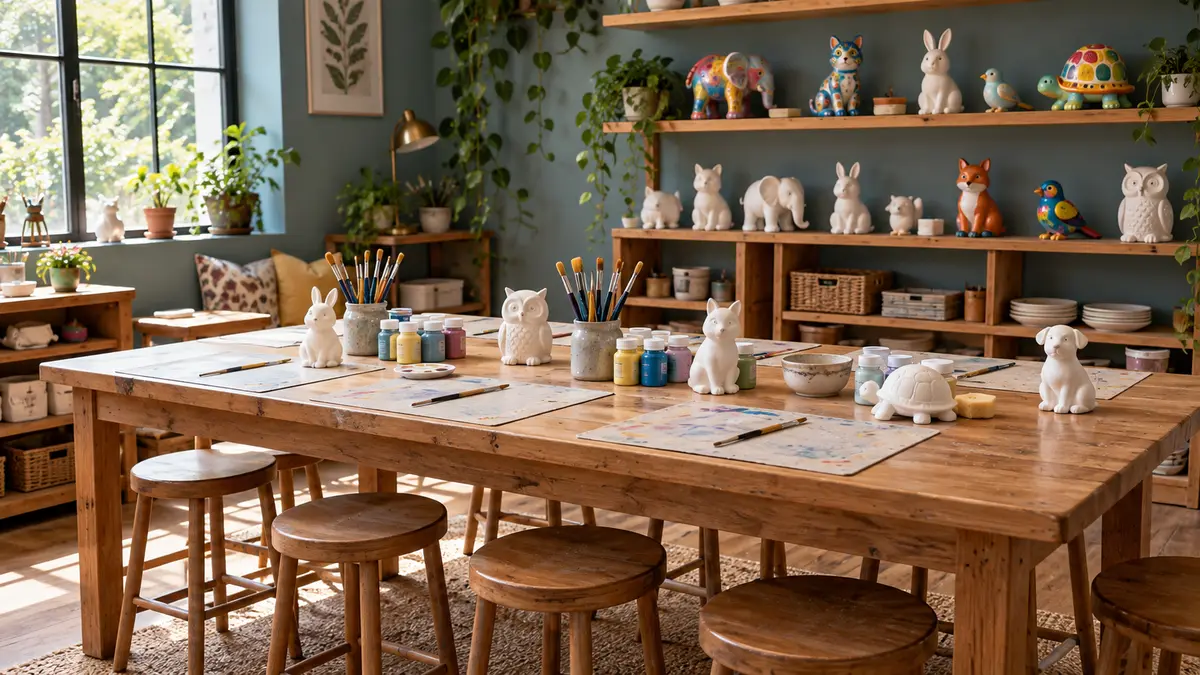
A visitor booking an art session buys time to make something, help getting started and the prospect of taking a personal object home. Those elements belong together, yet each needs its own explanation. A photograph of an attractive finished piece cannot tell a beginner which materials are included, how much guidance is available or what happens to the work after the session ends. The service begins with those expectations, before anyone touches the paint.
In a January 2026 Forbes article, Jasmine Browley describes Fête 832, the Houston studio founded by Andrea Nunn, as a place for guided figurine painting. The example from the United States provides a starting point for examining how a creative activity becomes a bookable local service. The following discussion is a general operational analysis, not an account of that studio's internal arrangements.
Describe the experience before displaying the options
Begin with what a participant will actually do. A guided introduction followed by independent making differs from a lesson in which an instructor demonstrates each step. Both can be worthwhile offers, but they attract different expectations. Someone seeking a relaxed social activity may welcome freedom; someone hoping to learn a particular technique may need a more structured format. Clear wording lets the visitor choose on the basis of the service rather than the appearance of an example.
Separate the activity from any promise about the finished result. A beginner may create something unlike the display piece while still receiving the advertised materials, guidance and time. Conversely, an attractive object does not excuse a confusing welcome or missing instruction. Staff need a shared description of what the session provides so that the booking page, arrival explanation and assistance at the table do not offer three different versions of the same product.
A useful booking description
- The activity and the level of previous experience expected.
- The materials and object included in the advertised option.
- The kind of guidance available during the session.
- Any choices that must be confirmed before arrival.
- The arrangements for finishing, collection and packaging.
- The distinction between included items and optional additions.
This description should be short enough to read before booking. Detailed instructions can follow at the appropriate moment. The aim is to establish the offer, not to make the visitor master an operating manual. Where an answer depends on the selected activity, say which choice determines it. A general statement that everything is included becomes unhelpful if a prominent display item belongs to a different package.
Give materials a clear place in the offer
A materials menu connects the visitor's imagined project with what the studio can prepare. Group choices by differences that matter to the participant: object shape, size, available finish or the scope of the activity. Internal supplier codes may be useful for purchasing, but they should not be the only explanation a beginner sees. The public description and the preparation record must still refer to the same item.
Distinguish a choice made while booking from a choice made at the table. If visitors reserve a particular object in advance, preparation should honour that selection. If the offer instead includes choosing from the range available on arrival, explain this before payment. These are different promises. Displaying many possibilities without saying which are reservable can create disappointment even when staff have prepared enough materials for every seat.
Optional additions should have an identifiable decision point. A participant needs to know that selecting a different object changes the package before work begins on it. Staff should not have to reconstruct that conversation at checkout. Equally, a modest initial menu can remain genuinely creative when the activity offers freedom within it. The breadth of the catalogue and the freedom to make personal choices are not the same thing.
Keep the organiser and the participants distinct
A group booking introduces several roles. One person may reserve the session, another may pay, and each participant may make an individual selection. Treating the organiser's name as the answer to every question can leave staff unable to connect a prepared object with its intended maker. The booking needs a practical way to associate choices with participants without requiring unnecessary personal information from everyone attending.
For example, an organiser could provide a numbered selection list and use the same numbers on arrival. A group with changing membership may prefer to allocate the confirmed choices at reception. Neither method should be imposed without explaining its purpose. What matters is that staff and the organiser agree on how individual selections will be recognised, and that the final version replaces earlier messages rather than sitting beside them.
Record the boundary of the organiser's authority over changes. If a guest requests an optional addition, establish who can approve the extra charge. If someone leaves early, establish whether another member of the group may collect their work. These arrangements can be simple, but silence is not an arrangement. Staff should not infer permission merely because several people arrived together or share the same reservation.
Make the first few minutes useful
The welcome is where written expectations meet the actual room. Show participants where to place their belongings, which materials belong to their activity and how to ask for assistance. Follow the relevant product and venue instructions for handling materials; a business overview cannot supply universal safety rules for different paints, surfaces or processes. The operational point is to make the applicable instructions accessible at the moment they are needed.
A short demonstration can explain the next action without prescribing the whole artistic result. Staff might show how the activity is organised, identify the materials and explain when help is available. They should distinguish an optional creative suggestion from an instruction that participants need to follow. This allows a beginner to experiment without wondering whether every difference from the sample counts as a mistake.
The room also needs an understandable route for questions. A visitor should not have to interrupt another group's welcome to discover where an item belongs. Consider the questions repeatedly asked during the opening minutes: they can reveal missing explanations or poorly placed supplies. Improving that introduction is a more specific response than assuming beginners need more supervision throughout the entire session.
Support personal choices without promising identical results
Examples help visitors imagine possibilities, but a display can accidentally become a guarantee. Identify examples as examples and explain the scope of the activity in plain language. A participant should understand whether the session involves following a common project, exploring a technique or making an individual design. That distinction affects both the materials prepared and the kind of assistance staff can reasonably provide.
When someone is unhappy with an early choice, discuss the options that actually remain for that object and process. Do not promise that every change can be reversed. Nor should staff dismiss the concern because the session is intended to be informal. A useful response connects the participant's aim with the available next steps, including any additional materials or time that would need separate agreement.
Keep the explanation about the work rather than the visitor's ability. A person attending for social reasons may value a comfortable experience more than technical improvement. Another may ask detailed questions. Staff can respond to these different interests while maintaining the same advertised service. Feedback about the level of guidance then becomes meaningful: it can be compared with what the studio offered rather than with an undefined expectation of artistic success.

Keep each work identifiable
At a shared table, several similar objects can quickly become difficult to distinguish. Establish identification before pieces move away from their makers. The method should suit the process and avoid interfering with the work itself. A numbered position, a separate record or an appropriate label may be useful, depending on the activity. The important connection is between the participant, the object and the agreed collection arrangement.
A simple fictional example shows why a group name alone is insufficient. A party reserves eight places, and two participants each make an additional item by agreement. The session now produces ten objects for eight makers. A collection record with only eight unchecked boxes cannot describe what is ready to leave. Recording each object against its maker allows staff to distinguish a complete collection from a partial one without counting the same participant twice.
If one person collects six objects and the remaining four stay behind, the record should show those movements explicitly. The group booking is neither entirely uncollected nor entirely complete. This example is an explanation of record design, not a claim about typical attendance or output. The same principle applies whenever one reservation contains several individually owned results.
Explain what happens after the making stops
The end of the booked session does not automatically establish that every type of work is ready for transport. Some activities may permit immediate collection; others may involve further handling or preparation. Describe the arrangement that applies to the actual materials and process. Avoid borrowing a standard waiting period from a different activity simply because both are described as painting or craft workshops.
Visitors need the practical consequence of that arrangement before they organise the rest of their day. If a return visit is required, explain how readiness will be communicated and what collection information they should retain. If collection is immediate, explain the relevant packaging and handling instructions. Do not rely on a hurried conversation at the door to introduce a condition that would have influenced the original booking.
Separate a planned collection time from confirmation that a specific object is ready. Staff should know what event permits that confirmation under the studio's process. This avoids treating a calendar entry as proof that all preparation is complete. When something changes, communicate the revised arrangement in terms the visitor can act on rather than offering a vague request to check again later.
Prepare for changes in the group
Changes in attendance affect more than the number of chairs. Materials may already have been selected, objects allocated and individual choices confirmed. Before accepting a revised group size, identify which parts of the preparation remain usable and which commitments need discussion. Apply the studio's stated booking terms consistently; this operational analysis does not prescribe cancellation rights, fees or refund rules.
Keep the latest agreement visible to the staff welcoming the group. A confirmation sent by one colleague can be lost in practice if the preparation list still shows an earlier choice. Use a clear revision point for the information that drives the session. The organiser should be able to confirm the final selections without repeating every message that led to them.
Unused prepared materials also need an explicit destination. Some may return to available stock under the relevant handling rules; others may remain allocated to a later arrangement. Do not count them as both available for the next group and reserved for the absent participant. The purpose is to preserve the actual agreement, not to assume that every unused item has the same condition or future use.
Use photographs to explain the right thing
A booking gallery can answer several different questions. A wide view explains the setting, a close view shows an available object, and a finished example suggests possible decoration. Give each image a clear purpose. If the gallery mixes different activities, identify which photographs belong to the offer being booked. Otherwise a visitor may reasonably expect a larger object or a different arrangement simply because it appears beside the booking button.
Keep the distinction between the supplied object and a participant's decoration visible. A sample should help explain the activity without suggesting that every session includes every material shown. When the available range changes, review the associated description and examples together. Updating the written menu while leaving an obsolete example in a prominent position can preserve the very misunderstanding that the update was intended to remove.
Separate making the work from photographing it for the studio's promotion. Participation in a session should not be treated as an agreement about all later uses of a person's image or work. Establish the relevant permissions before using identifiable visitor material, and keep any agreed limits attached to the selected photograph. For routine service explanations, staff can prepare suitable examples without making a customer's participation the basis of every new illustration.
Turn group requests into specific arrangements
A birthday gathering, a meeting of friends and an organised team activity may book the same creative format while asking for different surrounding arrangements. A request for everyone to sit together is different from a request for exclusive use of the room. Clarify which arrangement the studio can actually provide before describing the booking as private. This avoids allowing a broad label to replace a concrete agreement about shared space.
Keep special requests separate from confirmed inclusions. A note that someone has asked about a particular arrangement is not evidence that it has been accepted. Record the answer, any agreed alternative and the person responsible for preparing it. The colleague welcoming the group should be able to distinguish a question still awaiting resolution from a promise already made.
After the session, review whether the agreed arrangements worked with the activity itself. Did an additional introduction interrupt participants who had already started? Did a group photograph delay the planned handover? These questions concern the sequence of that particular visit, not assumptions about what every celebration requires. They help a studio offer a coherent experience without continually adding exceptions that staff discover only when guests arrive.
Ask questions that lead to a better session
A broad satisfaction score can conceal very different experiences. Someone may love their finished object but find collection confusing. Another may be pleased with the welcome and guidance while wishing they had chosen different colours. Ask about identifiable parts of the service: the clarity of the booking description, the materials offered, the introduction, access to help and the final handover.
Review those answers alongside the offer the person selected. A complaint about the absence of step-by-step teaching carries a different implication if the booking promised a structured lesson than if it clearly described independent making after an introduction. In either case the feedback deserves attention, but the appropriate response may be clearer communication, a revised format or better delivery of an existing commitment.
A studio can test a change without claiming that every improvement causes higher revenue or repeat visits. Rewrite an unclear materials description, revise the welcome or simplify the collection record, then examine the questions and difficulties that follow. Keep the scope of the observation modest. A better experience is built from promises that participants understand and staff can carry through, from the first choice to the moment each person receives their own work.
Leave a comment