
Briefings / Workforce
The Work a Concert Brings to Town
A concert is one evening for its audience and a longer sequence of work for its suppliers. Equipment hire reveals the links between a travelling show and a host city's working life.
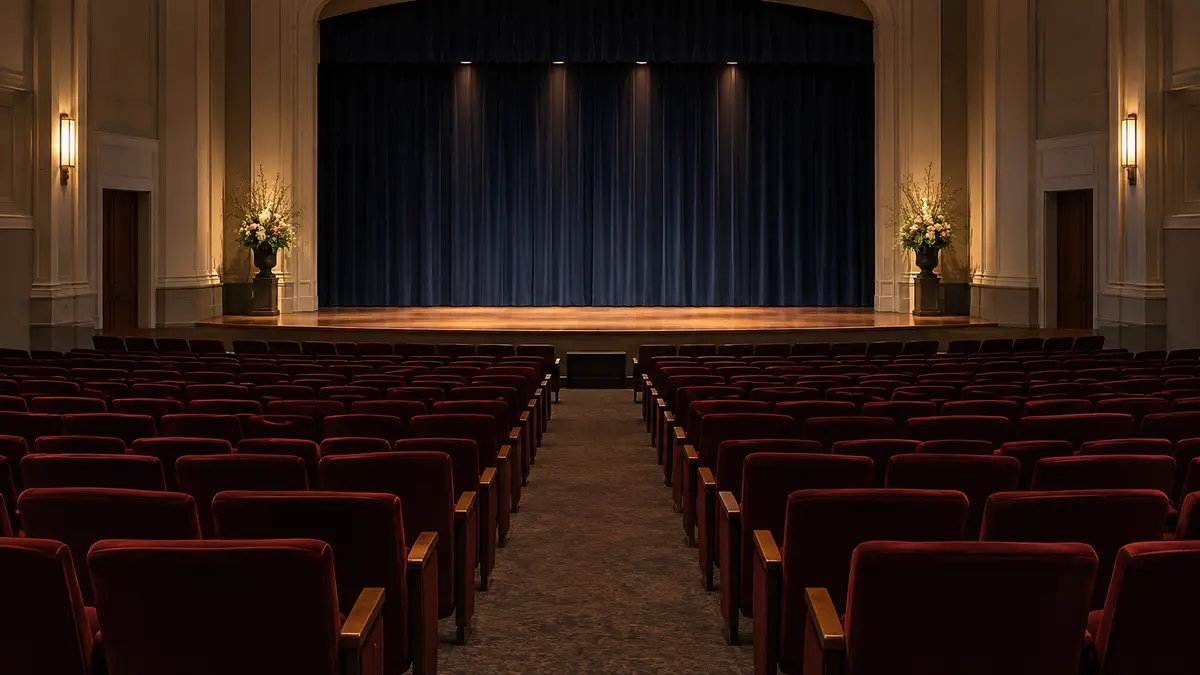
The audience experiences a concert as an evening. A supplier may experience it as a sequence of working days, beginning with a request for equipment and ending after the last returned case has been checked. Between those two perspectives sits an economy that is easy to overlook. The performance is the visible product, but its temporary presence in a city brings together organisations whose working lives extend well beyond the time printed on the ticket.
In a Forbes contribution published on July 27, 2025, Richard Fowler discussed Beyoncé's Cowboy Carter tour in the United States and drew attention to the work behind live entertainment, alongside spending by audiences. That production perspective opens a useful question for host cities: what work arrives with a show, what work is bought locally, and what remains when the show moves on?
A fictional equipment-hire business provides a way to explore those questions without pretending to reconstruct that tour's accounts. Imagine a local company that supplies portable presentation equipment to different kinds of events. A visiting concert becomes one booking among others. The firm and its booking in the following example are invented; they are not identified suppliers to Beyoncé or any other artist. Their purpose is to make the relationships behind a temporary event easier to see.
The city receives a production, not just an audience
A touring show has an identity that must survive a change of place. The next audience expects the same artistic project, even though the venue, surrounding streets and local businesses are different. Some people and equipment can travel to preserve that identity. Other requirements may be met in the host city. The boundary is a commercial choice for each production, not something that can be inferred from the size of the crowd outside.
For the fictional hire company, this boundary matters more immediately than the artist's popularity. A large concert that brings everything it needs offers no automatic equipment order. A smaller production that needs a locally available item may create a direct customer relationship. Audience size and opportunity for a particular supplier are therefore connected only through the production's actual requirements. The town does not acquire every part of the show's supply chain merely by hosting it.
The relationship also runs in the other direction. A production arriving with an experienced team may still need knowledge of a particular venue or a service available nearby. Local familiarity and travelling expertise need not compete. They can be complementary resources, bringing continuity of the show together with knowledge of the place. Whether that complementarity becomes paid work depends on the arrangement made, rather than on a general promise that events help everyone.
Before the doors open, a different clock is running
In the fictional business, the concert first appears as a future reservation for a defined set of equipment. The items have not left the premises, but they are no longer freely available for another booking on the same terms. That distinction gives the event an economic presence before any fan arrives. A promise about future availability already connects the company's calendar to the production's calendar.
The firm's employees also have work that an audience will never see. They need to establish what the customer requested, identify the items belonging to the booking and arrange the agreed handover. These are ordinary commercial activities, not a description of technical stage work. They illustrate why counting only hours during the performance would miss part of the relationship. The visible evening is supported by preparation occurring elsewhere and earlier.
Preparation can overlap with other customers' needs. The company might be handling a conference booking while getting the concert's items ready. Those customers share a supplier without sharing an event. A useful local business is not necessarily one that devotes itself completely to the visiting show; it may be one able to serve that show as part of a broader working calendar. Its contribution comes from that continuing business, not from appearing suddenly for a single night.
Three periods inside one booking
- Before the event, equipment and working time are committed to a future use.
- During the event, the agreed service is being delivered while those resources are unavailable elsewhere.
- After the event, the return and review of equipment determine when it can serve another customer.
These periods need not have equal lengths. Nor does identifying them establish the number of people employed or the value of the order. Their importance is that they describe different uses of time. An event calendar that records only the performance date cannot, by itself, show the full working calendar of a supplier participating in that event.
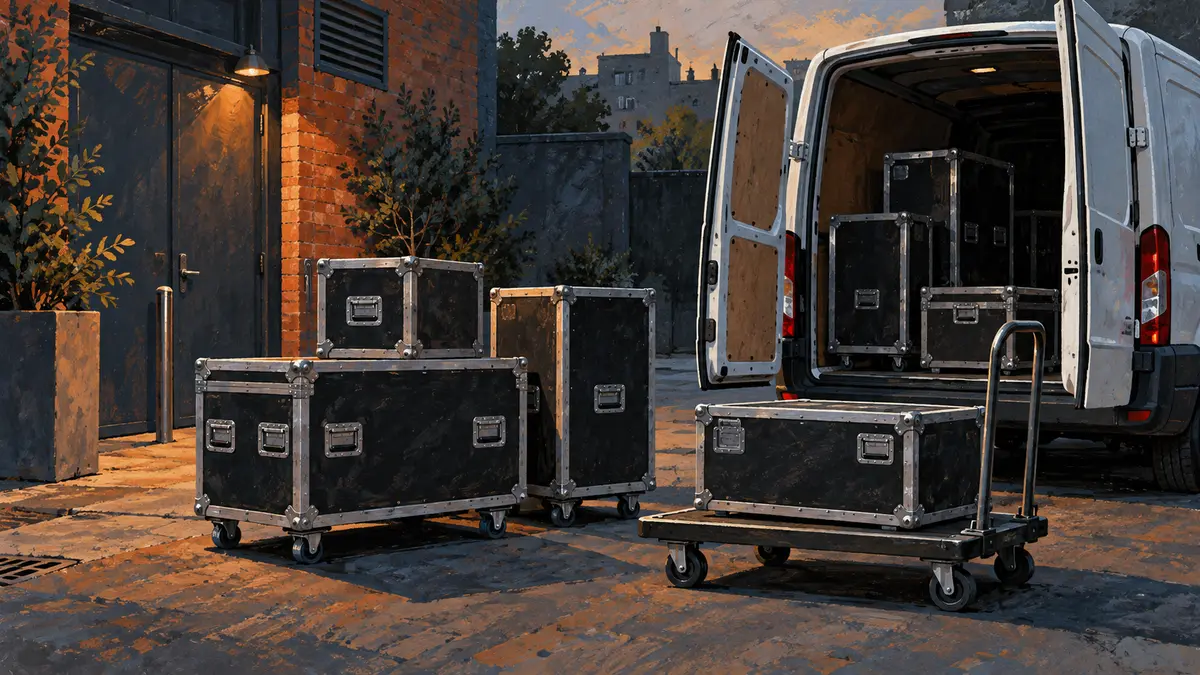
A hire case has a life between concerts
Consider one of the firm's reusable transport cases. Its role in the example is deliberately modest: it protects and groups equipment as it moves between customers. It does not become a new item every time a new audience assembles. The same physical asset can take part in different commercial activities over its working life, provided it is suitable and available for them.
This is one reason a host city's production economy cannot be understood solely through purchases made on concert day. A supplier may already own the things it uses to fulfil an order. The visiting customer buys access to a service involving those assets, not necessarily a newly manufactured product. Some of the economic relationship concerns the use of existing capacity rather than the creation of entirely new capacity.
Between bookings, however, reusable equipment does not cease to require attention or space. In the fictional firm, a returned case must be accounted for before it is treated as ready for the next customer. The arrival of a second event does not erase the obligations left by the first. Reuse connects performances across time, making the period between them part of the business rather than an empty interval outside it.
Local knowledge is useful without being exclusive
A person familiar with a venue may understand the ordinary pattern of its working day: whom to contact about an agreed delivery, where a customer expects a handover or how different departments communicate. Such knowledge is specific to a place. A touring colleague may have equally valuable familiarity with the production and its expectations. Neither kind of knowledge makes the other unnecessary.
In the example, the hire firm's contact and the visiting team's contact need to describe the same request consistently. If the two organisations use different informal names for an item, familiarity within either organisation may not be enough. Their collaboration depends on making their separate understanding usable across a company boundary. The commercial value lies partly in that connection, not simply in having knowledgeable people on both sides.
Experience gained from one booking can make a later conversation easier, but it does not guarantee another order. The next production may have different needs, bring different equipment or work through another supplier. Local expertise is a capability available to a market, not a claim on every visiting event. That distinction keeps a discussion of skills grounded in opportunity rather than entitlement.
Temporary work and a lasting occupation are different things
A concert booking can support a period of work without creating a permanent position. Conversely, a person with a continuing occupation may work across many short events. Looking only at the duration of a single show makes both relationships difficult to see. The relevant question is not simply whether the event is temporary, but how its work fits into the person's broader pattern of employment or business activity.
In the fictional company, an existing employee might spend part of the week on the concert and part on another customer. That is additional activity associated with the booking, but it would not justify announcing a newly created permanent job. If the company instead arranges additional help for that booking, the arrangement would describe a different relationship. Neither outcome can be established from the ticket count alone.
The distinction matters to workers as well as to economic reporting. A sequence of engagements may provide a continuing occupation, but the gaps, changes of location and variation in tasks still shape that occupation. A city interested in its event workforce needs to understand those connections between engagements. A photograph of a busy venue cannot reveal whether the people in it have another suitable opportunity next week.
Skills can travel further than the equipment
Someone's experience of communicating with a visiting team may remain useful after that team's cases leave town. It can contribute to a later event in another venue or a different kind of customer relationship. This does not mean that all event roles are interchangeable. It means that a temporary engagement can have a longer significance for the person doing it, separate from the duration of the original order.
A full venue calendar is not every supplier's calendar
Several events close together can look like an uninterrupted run of opportunity from the venue's perspective. From the hire company's perspective, their requirements may overlap in inconvenient ways. One customer may still hold equipment when another expects to receive it. Two performances on different evenings can therefore compete for the same resources, even though their audience hours never overlap.
The opposite is possible too. Two events that appear unrelated on a public calendar may use different parts of a supplier's equipment collection or require work at different times. They can fit together more readily than two apparently similar shows. The commercial pattern depends on what is supplied and when, not simply on how close the dates appear on a poster.
That gives the firm's wider customer base a role in the concert economy. Work outside music can help shape the use of assets and employee time between music bookings. It also creates existing commitments that a new concert must fit around. The local supplier arrives at the relationship with its own history and obligations; it is not unused capacity waiting for a famous visitor to activate it.
For that reason, the fictional firm's concert booking belongs beside its other orders in any account of its work. Removing the surrounding bookings would make the visiting show look like the whole business rather than one customer within it.
The audience and the production buy different things
A fan purchasing a meal and a production hiring equipment are two different customer relationships. Both may be associated with the same concert, but they involve different buyers, sellers and purposes. The restaurant is serving a visitor's experience of the evening. The hire company is helping deliver the event itself. Treating those purchases as one indistinguishable category hides how the opportunity reaches each business.
The geography can differ as well. A restaurant near the venue may be visible to fans walking past, while a useful equipment supplier can operate from premises elsewhere. Proximity to the entrance is not the only way to participate. The production's purchasing relationships may connect the event to businesses that never appear in photographs of the crowd or in accounts of the surrounding nightlife.
Nor is the money paid for a ticket automatically available to every local business. Different parts of a show have their own arrangements, and some organisations receiving payment may be based elsewhere. Understanding the local relationship requires identifying an actual purchase or period of work. It cannot be completed by assigning the whole event's apparent popularity to the host city's accounts.
Departure finishes the show, but not every relationship
For the fictional hire company, departure is a practical change of phase. The audience has gone home, while the firm's equipment is returning to its usual place in the business. A completed handover allows that equipment to become available again. Questions about what was supplied or returned may still need resolving between the two organisations. The public event can be over before the commercial relationship has fully concluded.
What remains need not be dramatic. The firm may have a clearer understanding of a visiting customer's expectations, and the customer may know a supplier it could approach again. An employee may have gained useful experience. Existing equipment may simply return to serving ordinary bookings. These are plausible forms of continuity in the example, not measured outcomes claimed for a named tour.
They also reveal why lasting value cannot be reduced to keeping the town permanently in concert mode. A capable local event economy has a life between headline performances. Its businesses, venues and workers serve different customers, preserve useful knowledge and carry resources from one engagement to another. A visiting concert participates in that life for a period; it does not create the whole system from nothing.
The strongest account of what a concert brings to town therefore looks both before and beyond the evening itself. It follows the work that makes the performance possible, distinguishes travelling production from locally purchased services and notices the occupations continuing after departure. The lights coming on are a moment in that story. The less visible work surrounding them explains how a temporary show can become part of a city's continuing economic life.
Leave a comment