
Briefings / Infrastructure
Exhibition Floors That Serve More Than One Event
Keeping a floor in use across events takes planning beyond opening day. Layouts, condition checks and changeover arrangements shape the next use.
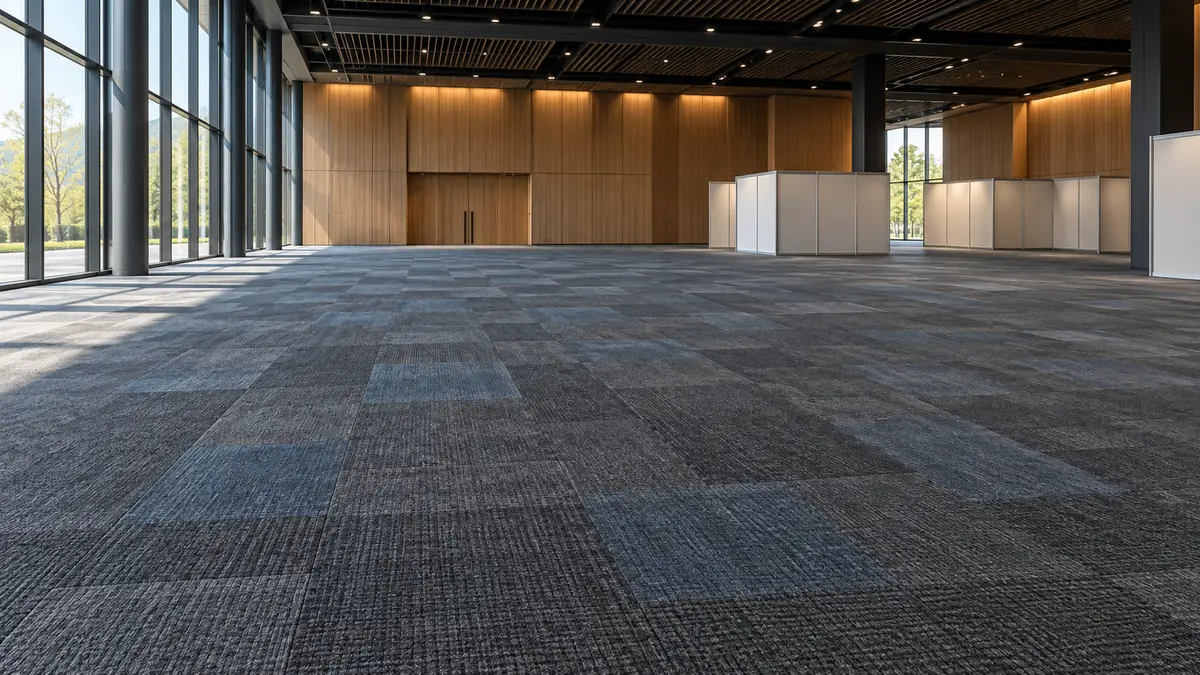
An exhibition floor belongs to more than the event currently occupying it. Once the stands have gone, the surface may need to serve a dinner, another exhibition or a different arrangement of rooms. Choosing a reusable floor therefore involves a sequence of events rather than a single opening day. The practical question is what remains useful between bookings and what must change before the next organiser can move in.
A 22 February Forbes report highlighted installed exhibition carpeting at Te Pae Christchurch in New Zealand as an alternative to replacing temporary carpet for individual shows. That example invites a wider examination of how venues organise flooring across successive bookings. It does not establish that every event or material has the same requirements.
Start with the surface already provided
Before specifying an additional floor, ask what the venue supplies as part of the room. A drawing showing an empty hall does not necessarily mean that the organiser receives a bare structural surface. The standard finish, any permitted changes and the condition in which the room must be returned are separate parts of the discussion. Clarifying them early helps avoid ordering material for a need that the venue already meets.
Separate ownership from whether a surface can be moved. A venue-owned covering can remain in service across many bookings while still allowing particular configurations to change. Conversely, a temporary overlay can be intended for repeated use elsewhere. Calling a floor permanent or temporary does not, on its own, describe how often the material is used, who maintains it or what happens at the end of an event.
This distinction is useful when comparing proposals. Ask suppliers and venue staff to identify the actual arrangement rather than relying on a broad label. The planning record should explain which surface is available, whether the proposed event can use it as supplied and who resolves exceptions. Technical suitability, installation methods and safety requirements need the appropriate qualified assessment; an operational comparison cannot replace that work.
Compare arrangements rather than material labels
There are several distinct ways to provide an event floor. An organiser might use the venue's existing finish, bring in an overlay that will be used again, or commission a covering intended only for that booking. Some events combine these approaches in different areas. Comparing them requires a description of the actual service delivered, including the areas covered and the work needed before and after use.
A material offered for repeated use still needs a practical next destination. If no party has accepted responsibility for collecting, storing and preparing it, the intended second use remains a proposal. An existing venue finish has a different starting point: it is already available, but the event may have requirements that need review. Neither arrangement should be treated as suitable simply because its description includes the word reusable.
Ask what is included in each offer. Supply, delivery, installation, removal and subsequent preparation may be priced or organised separately. Comparing a material-only figure with a complete service obscures the difference. A useful comparison places the same activities alongside each other and identifies anything that remains outside the offer, rather than trying to settle the choice from a single headline price.
Describe the event layout before the exception
The part of a hall used for an exhibition is not always identical to the part needing a change of surface. Some areas may retain the standard finish while a particular display requires another arrangement. Define the proposed layout and the affected areas before asking for an exception. A broad request to change the entire floor can otherwise conceal a requirement limited to one part of the room.
Keep the layout version with the request. If stands move or the usable area changes, the earlier flooring discussion may no longer describe the event being prepared. This is especially important when several parties work from separate drawings. A shared reference allows the organiser, venue and supplier to discuss the same boundary without assuming that their copies remain identical.
Distinguish appearance from function
A colour preference is different from a requirement arising from the activities planned in an area. Both may matter to an organiser, but they create different questions for the venue. State the reason for the requested change so that an alternative can be assessed against the actual need. Do not turn a visual preference into an unsupported technical requirement, or assume that a visual match proves suitability.
Measure area and use separately
Visitor attendance is an important event measure, but it does not identify how much flooring was provided. Two events with similar attendance can use different room arrangements. Likewise, the same installed surface can serve bookings of different lengths. Record the area and period relevant to the flooring arrangement separately from audience figures if the purpose is to understand repeated use.
The counting unit should be explicit. Square metres of physical material, square metres covered at one event and the sum of covered area across several events are different quantities. The last can exceed the first when material is used repeatedly. That is not an error, provided the report says what it is adding. Ambiguous totals make an ordinary reuse record appear to claim something it has not measured.
Keep partial replacements visible. A retained floor may need attention to a particular area without requiring replacement everywhere. Conversely, an overlay may return only partly suitable for the next planned use. Recording the actual quantity retained, replaced or awaiting assessment gives the next booking a more useful basis than a simple yes-or-no label for the whole batch.

A hypothetical comparison across three events
Consider an invented example, not a measurement of Te Pae Christchurch or a forecast for another venue. Suppose the same 600 square metres of covering serves three events, each using the entire area once. The physical quantity is 600 square metres, while the sum of area provided across the three uses is 1,800 square metres. The latter describes repeated service, not a larger quantity of material stored in the building.
Now compare a hypothetical alternative in which each event receives a new 600-square-metre covering used only once. Under those assumptions, 1,800 square metres of new covering is supplied. The difference in newly supplied area is 1,200 square metres. This is an arithmetic comparison of those specified arrangements, not a calculation of tonnes of waste, emissions or money saved.
Suppose instead that 40 square metres of the reusable covering must be replaced before the third event. Newly supplied material for that arrangement becomes 640 square metres, while the service delivered remains 1,800 square metres across the three events. The difference from the single-use comparison becomes 1,160 square metres. Keeping the replacement visible avoids describing the repeated-use arrangement as requiring no further material.
Do not extend the calculation beyond its inputs
The example assumes equal covered areas, sufficient suitability for each event and no other material requirements. It does not include transport, preparation, storage, installation or disposal. It also does not establish that the two coverings have equal mass, composition or useful life. A real comparison would need evidence appropriate to those questions. The arithmetic is useful because its boundary is narrow and stated, not because it resolves every consequence of the choice.
Allocate the work between bookings
Repeated use requires an arrangement for the interval after one event and before the next. Identify who checks the returned condition, who decides whether attention is needed and who confirms availability for the next booking. These responsibilities may belong to different organisations. A promise of reuse should not leave them to be inferred during the final hours of an event.
Where removal is part of the agreed arrangement, clarify the destination and the next preparation step. Where the surface remains installed, establish how its condition will be reviewed before the next organiser takes over. These are operational questions rather than instructions for lifting, fixing or treating material. The relevant technical work must follow the venue's approved arrangements and competent advice.
A concise changeover record can make the agreed division of work visible:
- Identify the room, affected area and layout version.
- State which surface remains and which material is to be removed.
- Name the party responsible for the condition review.
- Identify the destination of material leaving the room.
- Record any unresolved decision before confirming the next use.
Preserve a useful record of condition
A condition record should describe the relevant area clearly enough for another person to locate it. A photograph without a room reference or position can be difficult to interpret later. Pair observations with the agreed plan and distinguish existing conditions from those first noted at the end of the booking. The purpose is a shared account of what requires attention, not an automatic assignment of blame.
Leave room for uncertainty when the cause or timing has not been established. An observation made after an event does not by itself prove who caused it. The parties should follow their agreed process for assessment and any resulting action. Recording the question accurately is more useful than turning an incomplete note into a confident conclusion that later has to be withdrawn.
Once the review is complete, update availability for the next event. A surface awaiting assessment should not be presented as ready merely because it remains in the building. Equally, a limited issue should not automatically remove an entire stock of material from consideration if competent assessment supports a more specific decision. The record should reflect the confirmed scope of the finding.
Review comparable bookings
Several events can reveal patterns that are invisible in one changeover. Compare arrangements using consistent definitions for area, newly supplied material and replacements. Note differences in layout or duration before attributing a change to better management. A smaller event naturally requiring less coverage is not evidence that the same service has been delivered with fewer resources.
Include the work outside the public opening hours. A choice that looks simple during the event may require additional preparation or handling between bookings. Recording those activities separately helps the venue understand the arrangement without assuming that every repeated use has identical requirements. It also supports a clearer discussion with organisers about what a standard offer can actually include.
Keep claims proportionate to the records. Confirmed repeated use is worth reporting in its own terms. A claim about environmental advantage requires an appropriate comparison and evidence beyond a count of bookings. Describing what was retained, replaced and used again gives readers a concrete account without treating an operational record as a full lifecycle assessment.
Check availability beyond the public event dates
A calendar showing two events on different days does not prove that the same covering can serve both. The first booking may need the material until removal is complete, while the next requires it before exhibitors arrive. Include these preparation and release periods when checking availability. A gap between public opening dates can disappear once the full service periods are shown.
For material shared between rooms or venues, identify the quantity actually committed to each booking. A general stock total can include pieces already reserved, awaiting assessment or unsuitable for a particular configuration. Keep those distinctions visible when responding to an enquiry. An initial expression of availability should not become a firm promise without checking the relevant quantity and dates.
Changes to an earlier event can affect later commitments. If collection is delayed or an organiser expands the covered area, review the following bookings before accepting the change. Explain which part of the arrangement remains confirmed and which requires another decision. This makes the dependency clear without assuming that another supplier or an unplanned purchase will automatically resolve it.
Where the plan depends on material returning in suitable condition, agree how and when that condition will be confirmed. The next organiser needs a dependable decision point, not simply a reminder that the previous event must finish first. A documented alternative can be considered where appropriate, but its availability and suitability also need confirmation. The calendar should represent the arrangement the parties can deliver, rather than only the sequence they hope will occur.
Explain the standard floor before the stand is ordered
Discussing retention of an existing floor is easier before an exhibitor has ordered a separate display package. The initial brief should show which surface comes with the space and where its boundaries lie. An up-to-date description, a plan reference and a way to ask questions are useful. An unexplained picture of an empty hall can create different expectations for the stand designer, supplier and company employee approving expenditure.
Clarify what an exhibitor needs to submit when requesting a departure from the standard arrangement. This might include the affected boundary, the purpose of an additional layer, proposed dates and the responsible supplier's contact. Avoid collecting a long form simply for its own sake: each question should support a decision. When information is missing, identify the open point rather than merely saying that the request is awaiting approval.
If branding is the reason for a change, discuss available ways to achieve the intended appearance without automatically replacing the entire surface. Sometimes the objective concerns the stand's overall colour composition rather than the floor itself. Project participants should assess the alternatives; a general briefing cannot select them for everyone. The important distinction is between the visual outcome sought and a method already chosen to deliver it, so that comparison remains meaningful.
A material sample helps establish appearance, but approval of that sample should not be treated as permission for every application. Record the area and proposed arrangement to which the decision relates. A change in stand size, construction or intended use may require another review. Separately confirm that the supplier has received the current information, not merely a sample photograph from an earlier exchange when the order boundaries were still being discussed.
Agree the point after which changes are considered separately from the original order. This is not a universal deadline for every venue, but an understood arrangement between the participants. A late request can affect purchasing, room preparation or a subsequent booking. The response should explain what remains deliverable, which activities are added and who confirms the revision. Silence from one party should not be interpreted as agreement to a new configuration.
Before placing the final order, compare the approved plan, flooring description and supplier's offer. Check that they identify the same areas, quantities and service scope. Differences are better found before delivery, while wording can still be clarified. If one party uses square metres and another uses packs or sets, retain an understandable conversion between the units rather than assuming that equal totals describe the same supply.
Once confirmed, retain a shared final version and tell participants which earlier proposals no longer apply. Keep the change history separately where needed, so that it does not look like several simultaneously valid instructions. During preparation, staff need an unambiguous account of the current agreement. This document discipline connects the decision to retain or replace flooring to the actual order, rather than leaving it in an initial discussion of environmental intentions.
Confirm the next configuration
Before copying a previous specification into a new booking, check the intended layout, the available surface and any unresolved condition review. Confirm whether the same arrangement remains suitable and whether responsibilities have changed. Familiarity with the room can make preparation easier, but it should not substitute for confirming the particular event being planned.
A reusable floor is most useful when the arrangements around it support repeated service. Clear area definitions, appropriate assessment and an agreed changeover process connect the material to its next use. The aim is not simply to retain a covering after the doors close, but to know how it will serve the next event and what must happen before that event begins.
Leave a comment