
Briefings / Local Business
Making Room for Furniture to Return to Use
Furniture refurbishment depends on more than repair time. Item records, waiting stages and collection arrangements help a workshop manage the space between tasks.
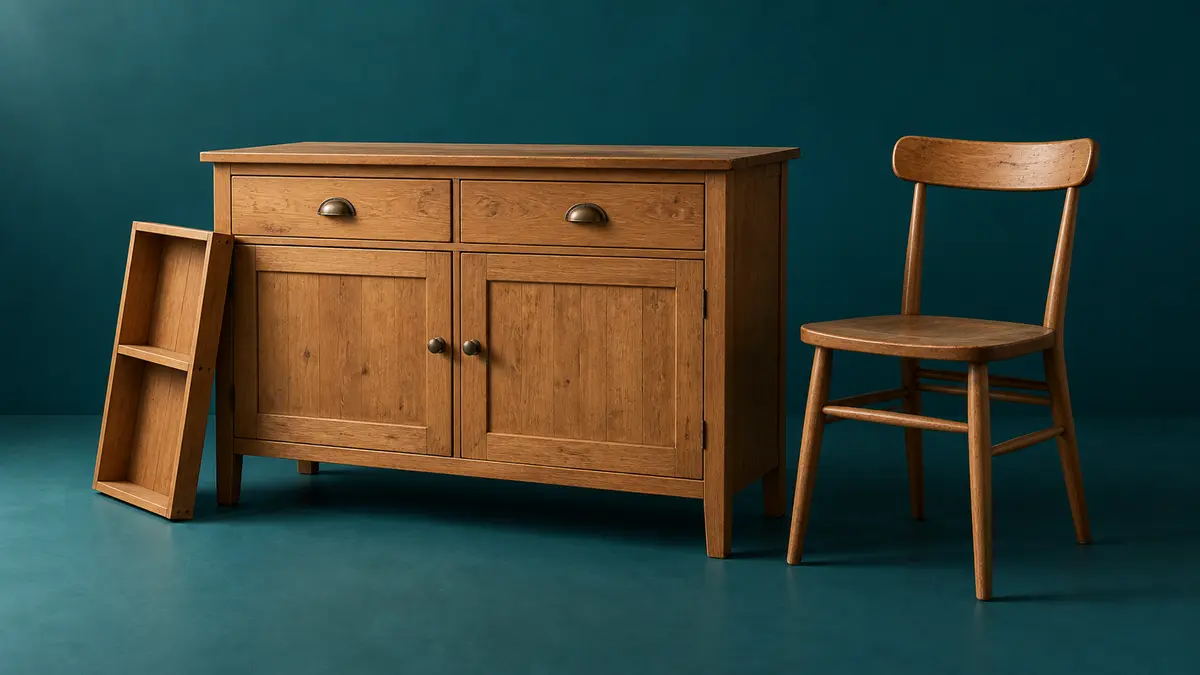
A piece of furniture can be repairable without being ready for a workshop to accept it. Someone must identify it, assess the proposed work, keep its parts together and arrange its eventual departure. Between those decisions, it occupies space. For a small refurbishment operation, the ability to follow each item through those stages can be as important as the number of pieces arriving at the door.
In the United States, Gone announced a pilot with Furniture Repair Bank on 24 April 2026. Scheduled through June, the arrangement would send selected furniture for refurbishment and return it to Gone's platform, with proceeds going to the nonprofit. The announcement provides a starting point for examining the practical journey between acceptance and release, rather than evidence of the pilot's eventual results.
The following analysis concerns that journey in a general workshop. It does not describe the partners' internal procedures. Repair methods, equipment use and suitability for use require competent assessment outside this operational outline. The question here is how people know which item they are handling, what decision comes next and why it remains on the premises.
Give each item an identity that travels with it
A delivery total tells the receiving team how many pieces arrived, but not necessarily which piece belongs to which job. Two similar bedside cabinets may need different work or have different destinations. If their records depend only on a broad description, a later photograph or message can be attached to the wrong item. Assigning an item reference at intake gives every subsequent record a common point of connection.
The reference should remain useful when the piece moves. A shelf position describes where it is now; an item reference describes what it is. Combining those ideas into one label makes relocation confusing. Keep location as a field that can change, while retaining the identity across assessment notes, work approvals, photographs and collection records. A small operation can do this with a modest shared register if everyone uses it consistently.
Record what arrived with the furniture. Removable shelves, handles, keys and fittings can become separated from the main piece during handling. A note that a cabinet has two loose shelves is more useful than discovering them after collection. The record should also distinguish components received from components expected but absent, so that an incomplete delivery does not silently become an unexplained workshop loss.
Define the unit before counting it
A dining set might be recorded as one job but several physical pieces. Either convention can serve a purpose, provided the register explains it. Use a job reference to connect related pieces and item references where they need to be handled separately. Otherwise, a change from counting sets to counting chairs can appear to be a sudden increase in throughput even though the underlying activity has not changed.
Separate receiving from approving the work
Physical arrival does not settle whether a particular repair should proceed. An item may require an assessment, a missing detail from the person supplying it or confirmation of its intended destination. Recording these questions at intake prevents the receiving team from accidentally promising work that has not been considered. The record can show that the item has arrived while leaving the decision on refurbishment explicitly open.
Identify the party responsible for authorising the proposed work and any change to it. This is a practical coordination step, not a substitute for appropriate ownership or contractual arrangements. A workshop should not have to infer authority from whichever person answers a message first. When different organisations are involved, their respective responsibilities should be clear before an item starts moving between them.
Make the assessment outcome actionable. “Needs attention” leaves the next person with almost the same question as before. A useful outcome might indicate that an agreed task can proceed, that information is missing or that the piece falls outside the work the operation has accepted. The exact categories should fit the workshop, but each should make the next decision and its owner visible.
Show waiting as a state of its own
A single label such as “in stock” conceals very different situations. One table may be waiting for assessment, another for an approved repair, and a third for a buyer to collect it. Their physical presence is similar, but moving them forward requires different actions. Splitting those states makes the register useful to the person organising the next day's work.
Do not confuse a status with a location. “Rear room” explains where someone might find a piece; it does not explain whether work is authorised. “Waiting for a part” explains a dependency but not where the piece has been placed. Recording both allows a colleague to find the item and understand why it is there without searching through a conversation history.
Every waiting category should have a route out. If information is missing, name who will request it. If a component is expected, record the next date for checking its availability rather than assuming that silence means progress. An item that has remained unchanged for several reviews may need a new decision, not simply another copy of the same status.
Account for the space between tasks
Hands-on work occupies only part of an item's stay. A finished dresser awaiting collection still takes up room, as does a table awaiting approval. Looking only at repair time can therefore understate the physical commitment involved in accepting another delivery. Intake decisions should consider what remains on the premises and which items are realistically expected to leave.
Piece counts alone cannot describe that commitment. A chair and a large wardrobe each count as one item, but they do not occupy interchangeable space. Record enough about size and handling arrangements to support the local layout. This does not require pretending that a simple inventory calculation replaces a competent assessment of storage, access or workplace safety.
Consider the consequences of moving an item repeatedly. If the next piece needed is routinely behind several unrelated jobs, the arrangement creates additional handling before useful work begins. A location plan can reflect the next likely action rather than just the order in which deliveries arrived. Where space is shared, agree who records a move so that the register remains connected to the room.
A simple example of stock building up
The following figures are invented to explain a stock-flow calculation. They are not observations from Gone, Furniture Repair Bank or any other organisation, and they are not a recommended operating target. Imagine a workshop that starts a week with 12 individual pieces on the premises, accepts eight more and releases five. Assuming no other movements, it ends with 15: twelve plus eight minus five.
The increase is three pieces, even though five have successfully left. That distinction matters. A team can be completing work while its physical stock continues to grow. The calculation says nothing about whether the eight arrivals were a good choice; it simply makes the change in the number present visible. Further decisions require information about the pieces and their next steps.
Suppose the 15 pieces at the end comprise four awaiting assessment, five in approved work, three ready for listing and three awaiting collection. These categories add to the same total. They also reveal that six pieces have reached stages beyond the approved-work queue. Increasing repair activity alone would not necessarily release those six items from the premises.
Keep the example's limits visible
This calculation treats each physical piece as one unit. It does not measure repair difficulty, size, sale value or hours spent. Five released chairs could free less room than one arriving wardrobe requires. The example also assumes that every movement is recorded and that the same counting convention is used at the beginning and end. A real register should resolve those definitions before the numbers are compared.
A useful review asks what action could move each category forward. The assessment queue may need a decision; the listing queue may need photographs or approval; the collection queue may need a confirmed appointment. These are different tasks. Giving them separate attention makes it possible to improve the whole journey without describing every delay as a shortage of repair capacity.
Prepare the next stage before declaring a piece ready
Completion of agreed workshop tasks is an important milestone, but it need not mean that the item is ready to leave. The next stage might require a description, photographs, an agreed listing or confirmation from a recipient. Record which of these applies rather than using “finished” to cover several unresolved activities. The person responsible for the next stage should be able to see what they are receiving.
Keep the description tied to the actual piece and the work recorded for it. A broad product description cannot explain which agreed changes were made to this particular item. Equally, a statement about work completed should not imply a certification or guarantee that has not been established. The purpose of the record is an accurate handover, not a more ambitious sales claim.
Take account of sets and accessories when preparing a release. If chairs are offered together, the listing and physical grouping should agree. If a removable component remains elsewhere, flag that before an appointment is made. A mismatch discovered at collection can leave the customer waiting and the workshop searching for something it already holds.
Close the loop when the item leaves
A reservation changes the commercial status of a piece without changing its physical location. Collection changes both. Keeping those events separate helps the team understand why an apparently sold item still occupies a place in the room. Confirm the arrangement for release, identify the relevant order or recipient and update the item record when departure actually happens.
A short release check can cover the practical essentials:
- The item reference matches the intended order or recipient.
- Agreed components and accessories are present.
- Any unresolved point has been discussed with the responsible person.
- The actual departure is recorded, rather than inferred from a booking.
- The vacated location is no longer shown as occupied by that item.
If collection is postponed, record the new arrangement and who will follow it up. Repeated postponements should remain visible when the team considers future intake. A piece should not disappear from the physical stock total simply because a sale has been agreed. Likewise, an item transferred elsewhere for further work needs a recorded movement and destination, not an unexplained gap in the register.
Review the whole journey over comparable periods
Compare arrivals, releases and the pieces remaining over periods that use the same definitions. Then examine where items wait and which decisions recur. A one-week increase may reflect a planned intake that will be worked through later; several consecutive increases may require a different discussion. Neither conclusion can be established from a single total without the surrounding circumstances.
Separate volume from the resources used to achieve it. A higher resale price does not by itself establish the contribution left after transport, materials, staff time and other relevant costs. This article does not supply a profitability formula for a particular organisation. It suggests keeping those observations distinct so that a promising sale is not automatically treated as proof that every similar item should be accepted.
The same restraint applies to environmental claims. Recording that an item was repaired and released establishes a useful operational event. It does not independently measure avoided waste, emissions or what would otherwise have happened to it. Those questions need an appropriate method and evidence. A workshop can describe its verified activities clearly without attaching unsupported impact totals.
Reconcile the register with the room
Even a carefully organised register can drift away from the physical position. An item is moved to reach another job, a label comes loose, an arrival is entered twice or a departure is confirmed only verbally. A periodic reconciliation helps detect those differences before new decisions rely on the records. Check in both directions: whether each record corresponds to an item in the workshop's custody and whether every item found has a record.
Agree the point in time to which the check relates. If receiving and collection continue during the walkthrough, record those movements separately. Otherwise, an item present in the morning but collected before the check ends can appear to be missing. A date alone, without a time or an understood cut-off, may not establish the sequence. A small premises needs an agreed approach understood by the people receiving, checking and releasing furniture.
Do not automatically assign a new identity to an item whose label cannot be read. First compare its description, photographs, components and recent movement records. Creating another entry for an already recorded piece increases stock only on paper. Until the connection is established, put the question on an exception list and assign someone to investigate. Distinguish an unresolved identity from a confirmed new arrival rather than concealing uncertainty behind a final status.
When a record exists but the item is not in its stated location, check adjacent work areas and confirmed transfers. It may be with someone for assessment or may have moved with the rest of a set. That possibility does not establish that every absence is an innocent relocation. If there is no supporting evidence, leave the difference open for the responsible person to investigate instead of deleting the entry to make the totals agree.
Duplicate records need particular care. Similar descriptions do not prove that two entries concern the same piece: identical chairs may genuinely arrive under different jobs. Compare identifying features and intake histories. If duplication is confirmed, establish the main entry and retain a connection to the corrected record. Subsequent photographs, approvals and collection information should not lose their identifiable subject when the stock total is corrected.
Record the reason for a significant correction, its date and the person who confirmed it. This separates actual arrivals and departures from changes to an erroneous entry. Removing a duplicate, for example, reduces recorded stock without any furniture leaving the workshop. Show that adjustment separately from releases when reviewing weekly results. Otherwise, a data correction can be mistaken for an improvement in throughput that did not happen.
After reconciliation, discuss recurring causes. If labels are lost at the same stage, review how the link to the item reference is maintained; if moves go unrecorded, clarify responsibility for updating location. Correcting the register restores the current picture but does not itself prevent another error. A useful check produces both a reliable stock position and a specific change to everyday practice that can be reviewed on the next walkthrough.
Use a pilot to improve the decisions
Before expanding an arrangement, decide what the initial period should help the participants learn. They might want to understand whether intake descriptions are complete, whether the work-approval route is clear or whether finished pieces reach collection promptly. Choose observations that the existing register can support and identify any additional information that needs to be collected deliberately.
Include exceptions in the review. Pieces declined, returned for clarification or left waiting may explain more about the arrangement than those that moved smoothly. Record the reason without turning the review into a judgement about individuals. A recurring uncertainty over who approves work calls for a clearer decision route; it is not resolved by adding another optimistic intake target.
Conclude with specific changes to the process and a date to review them. An item reference, a visible waiting state and a confirmed release record are modest tools, but together they allow the participants to follow what actually happened. Making room for furniture to return to use depends on that complete journey, from the first acceptance decision to the moment the piece leaves for its next destination.
Leave a comment