
Briefings / Technology
New Cooktops Need a Ready Installation Network
The Whirlpool–BORA announcement gives dealers and designers a preparation task: turn product interest into assessed, priced and supportable kitchen projects.
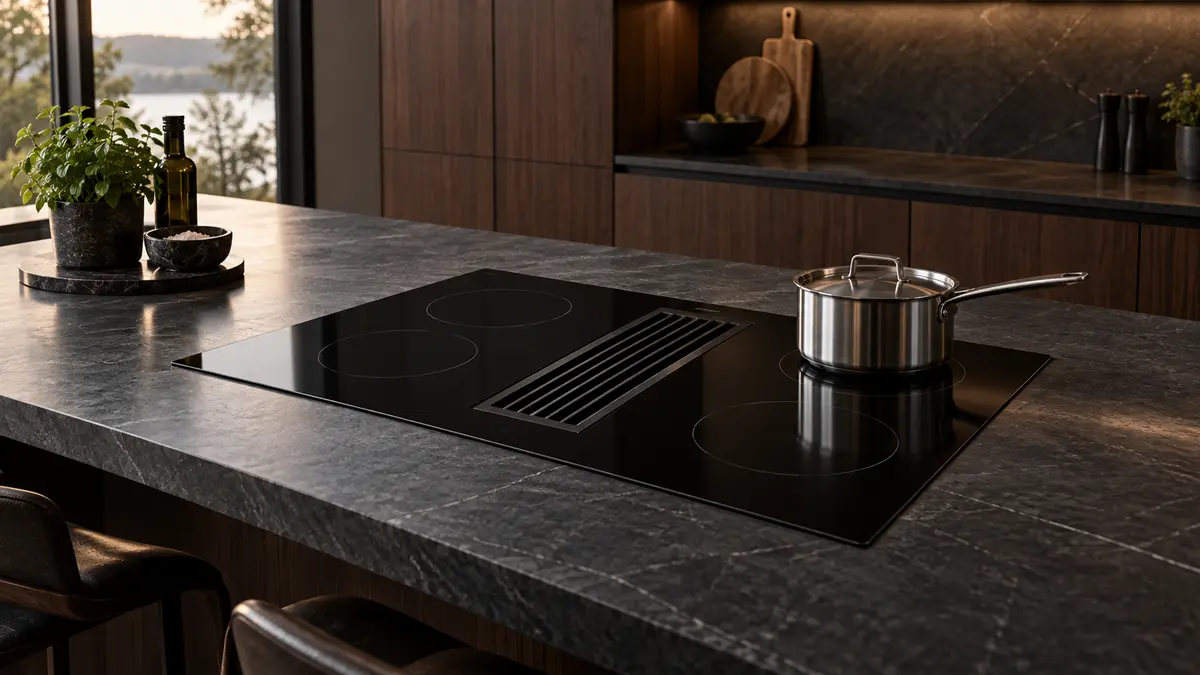
A new cooktop can change a kitchen drawing before it changes a kitchen. Between the announcement and the first successful installation sit dealers, designers, cabinet makers and service teams. Their readiness determines whether an appliance innovation becomes a dependable local business opportunity or a series of expensive exceptions.
On 26 February 2024, Forbes reported the Whirlpool–BORA partnership to bring induction downdraft cooktops to North America. The report identified JennAir and KitchenAid as the intended brands and described availability planned for the second half of 2025. This briefing examines the preparation implied by that announcement from its 2024 perspective; the proposed timetable is not treated as an accomplished launch.
Whirlpool’s announcement confirmed the collaboration and a planned 2025 introduction. BORA’s February statement described a partnership for the United States and Canada, alongside opportunities for kitchen manufacturers, designers and developers. Those statements establish the commercial setting. The following analysis develops its own questions about delivery, without adopting the manufacturers’ promotional claims as measured outcomes.
The sales unit is an installed kitchen, not a boxed appliance
For a manufacturer, a shipment may mark an important commercial milestone. For a household, the useful result is a functioning kitchen. The distance between those two events contains measurement, scheduling, delivery, fitting, commissioning and explanation. A dealer introducing an unfamiliar category needs to understand that complete sequence because the customer will often regard it as a single purchase, even when several firms perform the work.
A product that combines cooking and extraction also connects decisions that might previously have been made separately. The appliance selection interacts with the cabinetry and ventilation arrangement. Removing an overhead hood from the design does not mean eliminating ventilation planning. Nor does a new design concept establish that every existing kitchen can accommodate a particular model without modification.
The commercial implication is straightforward: the dealer needs a way to qualify the project before promising a complete price or installation date. This does not require a salesperson to become an installation engineer. It requires an agreed handoff to qualified people, a clear list of unresolved questions and a distinction between an indicative quotation and a confirmed project offer.
Separate interest from a project that can proceed
A showroom visitor may be attracted by the appearance of an open kitchen or by the idea of an integrated appliance. That is useful interest, but it is not yet a qualified order. The household’s renovation stage, budget, existing layout and completion deadline all affect whether the product belongs in the project. Asking these questions early can prevent a promising conversation from becoming an avoidable cancellation.
New construction and refurbishment also present different coordination problems. A project still being designed may allow several options to be considered together. A replacement in an existing kitchen may have fewer degrees of freedom. Dealers should not assume that the same sales conversation or installation estimate fits both situations merely because the proposed appliance has the same model number.
A practical qualification record can identify the project type, responsible designer, expected decision date and need for a site assessment. It should avoid recording speculative technical answers as confirmed facts. The record becomes useful when the next person can immediately see what has been checked and what still requires attention, rather than having to reconstruct the first conversation from memory.
An early drawing is not an installation specification
Concept images are designed to communicate an idea. They do not replace the final product documentation or an assessment of the actual property. Dimensions, access, services and installation arrangements must be checked against the relevant model instructions when available. This article does not provide electrical, ventilation or fitting specifications; those decisions belong with qualified professionals and the applicable documents.
That boundary protects the business as well as the customer. If a retailer treats a marketing image as a complete technical promise, later clarification can look like a change of terms. Explaining the assessment process at the outset makes the uncertainty visible while there is still time to resolve it and before other trades commit irreversible work.
Train the handoffs between firms
Training is often described as learning a product’s features. A local launch also requires training in how work moves between organizations. A kitchen designer needs to know when to involve the appliance specialist. The dealer needs a reliable route to installation advice. The installer needs access to the final documentation and a way to raise a problem before arriving at the property.
These handoffs can be rehearsed using a small number of representative project scenarios. Follow an inquiry from first discussion through measurement, ordering, delivery and handover. Ask who owns each decision and what evidence allows it to advance. A missing handoff is easier to repair during a rehearsal than when a customer’s kitchen is already dismantled.
The purpose is not to create a complicated process for every sale. It is to standardize the few points at which misunderstanding becomes costly. A brief checklist, a named contact and a clear escalation route can be more valuable than a large training folder that nobody uses during a live installation.
- Identify the person responsible for confirming the project’s suitability.
- Record which product documents and site details have been reviewed.
- Agree who coordinates delivery with the other trades.
- Define how unresolved questions reach qualified technical support.
- Confirm who explains operation and routine care to the customer.
Build the quotation around the whole job
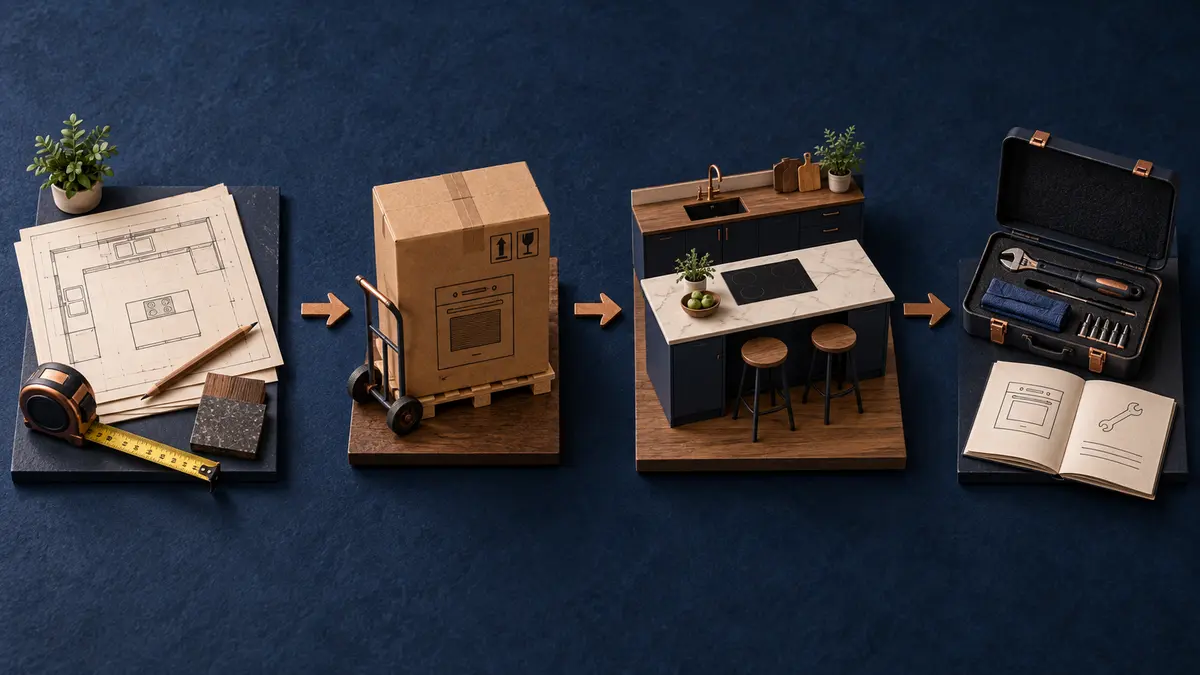
A headline appliance price can be easy to compare while the installed project is not. Delivery, preparation, fitting and related work may be supplied by different firms. If the quotation does not explain those boundaries, the customer may assume that an attractive product price includes services that remain uncosted. The result is dissatisfaction even when no individual supplier has changed its own price.
A useful offer distinguishes confirmed items, allowances and exclusions. It explains which services the retailer supplies directly and which require a separate arrangement. Where an assessment is incomplete, the uncertainty should be attached to the relevant item rather than buried in general wording. This helps the household compare alternatives on a consistent basis and helps the dealer avoid relying on ambiguous expectations.
The same discipline applies internally. Gross margin on the appliance is not the final contribution from the project if staff spend substantial time on repeated visits, delivery changes or unresolved questions. Early projects can be reviewed for these additional costs without assuming that every exception will recur. That review informs both future pricing and improvements in the handoff process.
A demonstration should set accurate expectations
A working display can help customers understand an unfamiliar appliance. It also creates a responsibility to distinguish the display conditions from the conditions in a particular home. The purpose is to make the product understandable, not to suggest that one showroom experience proves identical performance in every layout or cooking situation.
Sales teams should be comfortable explaining what the demonstration does and does not establish. They can show controls and discuss the intended user experience while referring installation-dependent questions to the appropriate specialist. A clear explanation of routine care is also part of a useful demonstration. Customers need to understand the ongoing relationship with the appliance, not only its appearance on purchase day.
Feedback from demonstrations can improve the launch. Repeated questions may reveal unclear materials, unfamiliar terminology or a concern that the initial sales presentation overlooked. Recording these questions gives the dealer and supplier a practical learning loop. It is more informative than counting visitors alone because it identifies the information people need before making a considered decision.
Service readiness belongs before the first sale
After-sales support is easy to describe as a future issue when a product is still at the announcement stage. In practice, the first customers will need the same clarity as later ones. Who receives a fault report? How is the issue assessed? Which organization coordinates a visit? What information should be available to the service team?
These questions should be resolved before a retailer promotes a comprehensive support promise. A contact number is only one part of service readiness. Staff also need to know how to identify the product, retrieve the relevant information and route the request. Any commitments about response or replacement must reflect arrangements that actually exist, rather than the assumptions of an enthusiastic salesperson.
Where parts or specialist skills are required, the channel needs a realistic account of availability and escalation. This is not a prediction that a new appliance will be unreliable. It is recognition that support capability is part of the installed product’s value. A well-managed exception can preserve trust; an unclear chain of responsibility can damage it even when the underlying issue is limited.
Match stock commitments to confirmed readiness
Changes during a project also need an owner. If the household chooses a different layout or another trade changes the planned work, the original assessment may no longer apply. A simple change record should identify the decision, its effect on cost and timing, and who has confirmed the revised arrangement. This keeps an earlier approval from being reused after the conditions on which it depended have changed.
A dealer may be tempted to secure substantial stock early to signal commitment or avoid missing demand. That choice should be considered alongside the readiness of the local installation and service network. Inventory cannot resolve a missing technical assessment or a shortage of available fitting appointments. Product availability and project completion capacity are separate constraints.
A phased introduction can connect orders to what the channel has learned. Initial stock and display commitments can be reviewed against qualified inquiries, completed assessments and credible delivery schedules. The aim is not to minimize stock at all costs. It is to avoid confusing a large number of expressions of interest with a pipeline of projects that are genuinely able to proceed.
Suppliers and dealers should also make the status of future dates explicit. An announced availability window is not the same as a confirmed delivery appointment for a particular household. As plans become more concrete, customer communication should become more specific. Clear distinctions reduce the risk that a broad launch statement is repeated as an unconditional promise several steps down the sales chain.
Judge the launch by completed projects
Sales totals alone do not show whether a new category is becoming easy to deliver. Useful operating measures include the share of inquiries reaching assessment, cancellations after assessment, first-time completion and requests for follow-up. These measures should be defined consistently so that the business can distinguish a learning problem from normal variation between projects.
Early numbers need careful interpretation. A small set of deliberately simple installations does not establish performance across every kind of property. Conversely, one difficult project does not prove the category is commercially unworkable. Reviewing the circumstances alongside the figures helps the channel decide where it can expand confidently and where it needs more preparation.
Collecting lessons should lead to specific changes. A revised question at the first inquiry may prevent a later mismatch. Better delivery coordination may remove a repeat visit. Clearer care instructions may reduce avoidable support calls. The value of measurement lies in those improvements, not merely in assembling a reassuring launch dashboard.
- Define the local customer and project types the initial offer will serve.
- Confirm product documentation and the route to qualified assessment.
- Train sales, design, installation and service handoffs together.
- Make quotation boundaries and delivery status explicit.
- Begin with projects the channel can support reliably.
- Review completed work and the reasons for exceptions.
- Expand the offer as demonstrated delivery capacity grows.
The local opportunity is in dependable coordination
The 2024 partnership announcement concerns a product category, but the local business opportunity extends beyond the appliance itself. Dealers and designers can create value by making a complex purchase easier to understand and execute. Installers and service firms contribute by turning product documentation and project information into a dependable result at the customer’s property.
That opportunity should not be confused with a guaranteed market outcome. Demand, pricing and the eventual product offer still matter. The argument is narrower: a launch is more commercially useful when the surrounding channel is prepared to deliver it. An attractive design concept cannot compensate indefinitely for unclear quotations, incomplete assessments or an uncertain support route.
For local firms, the preparation period is therefore productive time. It can be used to establish responsibilities, test the customer journey and identify the limits of the initial offer. When the product becomes available, those arrangements determine whether the first installation is the beginning of a repeatable service or merely the end of a difficult sale.
Leave a comment