
Briefings / Infrastructure
A Museum Needs Room for More Than Its Collection
Plans to update the Louvre put visitor space in focus. Entrances, connected galleries and places to pause shape how people encounter a collection.
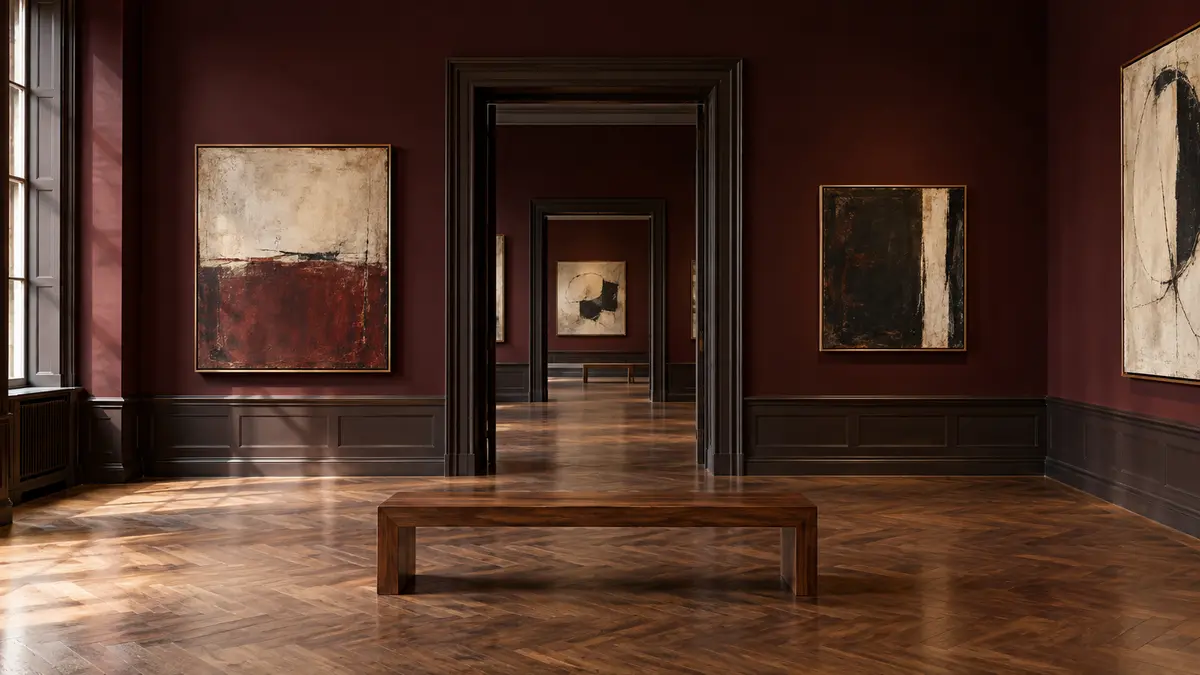
A museum visit begins before the first painting. There is an entrance to find, a direction to choose and often someone else to keep beside you. Later comes the search for a seat, another gallery or the way out. None of these moments is the main reason for buying a ticket. Together, however, they determine how much of the visit can be devoted to the collection rather than to negotiating the building.
On January 28, 2025, Emmanuel Macron announced plans to renovate the Louvre in France, including a new entrance and a separate space for the Mona Lisa, according to Reuters. These are proposed changes, not facilities already available to visitors.
The announcement brings an easily overlooked part of cultural infrastructure into view. A museum needs room not only for objects but for the different activities involved in seeing them. Expanding that room is not simply a matter of adding display walls. An arrival hall, a connecting passage and somewhere to rest have different jobs. Improving one can change the demands placed on the others, with consequences for the character of the whole visit.
The entrance is part of the museum
A doorway marks admission, but an entrance does more than separate ticket holders from the street. It is where an unfamiliar building first becomes understandable. Visitors need to connect the destination they have imagined with the place in front of them. Some arrive with a particular work in mind; others have only a few hours and no fixed route. The same entrance must accommodate those different starting points without assuming that everyone already understands the collection.
The January 28 announcement and presidential speech propose an entrance at the Perrault colonnade and underground connections beneath the Cour Carrée. They also envisage independently accessible accommodation for the Mona Lisa and infrastructure work while visits continue. The proposals link access, internal movement and the experience of the collection; their delivery remains ahead.
A second approach can offer more than another place to admit people. It can give a visitor a different first relationship with a building. Yet the usefulness of that choice depends on what happens after entry. Two doors leading immediately to the same confusing junction would not provide two equally intelligible beginnings. The relevant question is how each arrival becomes a route through the museum, rather than how many thresholds appear on a plan.
This is why orientation space should not be treated as leftover space between more important rooms. A person looking at a map is already using the museum, even while standing still. So is a group deciding where to begin. Allowing those decisions to happen without interrupting people who already know their direction gives the entrance an institutional purpose of its own: helping visitors turn admission into an actual visit.
One famous painting, several kinds of visit
A celebrated object can give someone a clear reason to enter a museum. It can also concentrate attention within a much larger collection. These are not competing truths. A visitor who arrives for one painting may discover something unexpected nearby, while another may prefer to spend limited time on that single encounter. Neither intention can be understood merely by counting both people as admissions.
Giving a famous work a more distinct route therefore raises a curatorial question as well as a circulation question. What connections remain between the focused encounter and the wider collection? A direct approach may help someone find a chosen destination. It may also reduce the accidental discoveries produced by a longer walk. The balance depends on how the options are explained and connected, not on the existence of separation alone.
A direct route need not become the only route
There is a difference between making a short visit possible and prescribing a short visit. A visitor may want a focused encounter today and a broader exploration on another occasion. Another person may change their mind once inside. A museum can be considered as a set of connected opportunities rather than a single compulsory sequence, with enough clarity for people to recognise when they are choosing one experience over another.
The collection outside the most famous room matters in this relationship. If it becomes legible only after a visitor has committed to a long route, its presence can remain abstract. Conversely, suggesting that every object deserves the same amount of everyone's time ignores the choices that make an individual visit meaningful. The architectural challenge and the editorial challenge of explaining a collection meet at these points of choice.
Attendance does not show where people gather
An annual attendance figure compresses many different days into one number. It says little about where visitors stand at the same moment or how long they remain there. For a museum considering its public spaces, that distinction is substantial. A busy passage, a room where people linger and a quiet gallery can belong to the same institution during the same afternoon. The annual total cannot describe those contrasting experiences by itself.
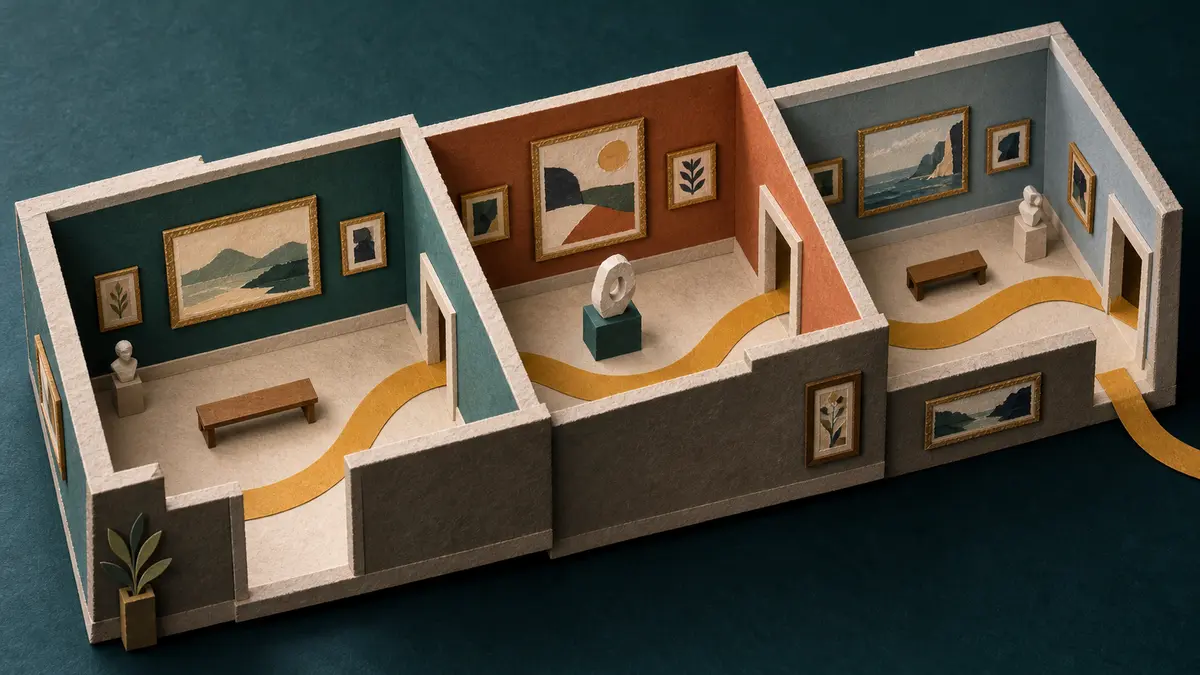
Consider a fictional small museum with two galleries and one connecting room. In one version of the afternoon, visitors divide their attention between both galleries. In another, a single exhibit draws most of them into the first gallery before they continue together towards the second. The number of admissions could be identical, while the connecting room is used in quite different ways. This example describes patterns of movement, not a safe occupancy calculation.
Time spent looking changes the picture again. If visitors become more engaged with the first gallery, they may stay there longer. That can be a cultural success even as it changes the rhythm of movement. Faster circulation is consequently not a complete definition of improvement. A museum is not trying to move everyone past its objects as quickly as possible; it is trying to make worthwhile attention possible within a shared place.
Several observations would describe that place more meaningfully than a single headline total:
- Where visitors pause to decide their next direction.
- Which spaces are used mainly for looking and which for passing through.
- How focused visits connect with longer explorations.
- Where companions can regroup without ending their visit.
These are questions about experience, not substitute engineering specifications. Their value is that they keep the interpretation of attendance connected to what people actually do inside a building. Without that connection, increasing the total could be mistaken for improving every part of the visit, even though a larger audience and a better experience are separate outcomes.
A place to pause belongs in the visit
Stopping is not the opposite of visiting. Someone may sit to think about what they have seen, wait for a companion or decide whether to continue. A family can move at different speeds without wanting to separate for the rest of the afternoon. These ordinary variations mean that the museum's public space is used in episodes, with pauses between periods of concentrated attention.
A seat has a relationship with the surrounding route. Somewhere to rest that is difficult to find or appears to require leaving the collection can have a different meaning from a visible pause along the way. The issue is not simply the presence of furniture on an inventory. It is whether a visitor can understand the pause as part of the visit and see how to resume afterwards.
Rest also changes the way a long building is perceived. A route can feel like a commitment to finish everything ahead, or it can offer points at which the next decision remains open. The latter does not mean that everyone should follow an identical pattern of breaks. It recognises that available time, energy and interest differ, sometimes between people who entered together.
For the institution, these modest spaces belong to the public purpose of the building. They do not add another object to the catalogue, yet they can support the time someone gives to objects already there. Treating only display space as productive would miss that contribution. A museum's capacity to welcome people includes the possibility of remaining there comfortably enough to continue paying attention.
Staff work where routes meet
Visitors encounter staff at moments when the building is not self-explanatory. A question about a room can also be a question about how much time remains, whether companions can reunite or whether another entrance changes the route. Such exchanges make the museum usable in ways that a floor plan alone cannot capture. They also reveal how closely public-facing work is connected to the organisation of space.
A clearer junction may reduce repeated uncertainty, but it does not remove the need for human judgment. People bring circumstances that a sign cannot anticipate in full. The useful distinction is between questions arising from an avoidably obscure route and questions requiring an individual response. Architecture and information can address the first category while leaving staff more scope for the second; that is a possibility to examine, not a promised staffing saving.
Directions carry expectations
Telling someone where to go also shapes what they expect to find. A direction towards a particular artwork, a quiet place or an exit is meaningful only if the destination matches the description. When a route changes, yesterday's correct answer can become today's confusion. The work of keeping explanations aligned with the accessible building is therefore part of operating a museum, not an optional supplement to the collection.
This connection becomes especially visible during physical change. Staff experience the temporary museum as a working place while visitors encounter it as a destination. Their perspectives are different but related. A route that looks simple in isolation may produce repeated questions when used by people arriving with older maps or different assumptions. Understanding those encounters can inform the next explanation without inventing a universal script for every visitor.
The museum and the street meet at the queue
An entrance also belongs to the city outside. People approach from different directions, look for companions and decide whether they have reached the right place. A museum's public boundary is therefore more than its wall. It includes the transition in which an urban pedestrian becomes a visitor and, later, returns to the surrounding streets with another destination in mind.
Redistributing arrivals and relocating a queue are not necessarily the same achievement. If uncertainty simply moves from one side of a building to another, the location has changed without resolving the underlying question. If different approaches become understandable and connect to different intended visits, the relationship can change more substantially. Evaluating the difference requires attention to the whole approach, rather than an isolated image of an impressive doorway.
It would be premature to convert that possibility into a forecast for neighbouring businesses. A different entrance can alter where people walk, but spending depends on more than footfall. The narrower and more useful point is that cultural infrastructure is not sealed off from its setting. Explaining arrival and departure well helps the institution remain connected to the city without claiming that every architectural change produces a measurable commercial gain.
Building while the collection remains open
A renovation has an intermediate life between its announcement and its eventual completed form. During that interval, the institution still has an audience. Some visitors will encounter temporary routes rather than the final arrangement imagined in a presentation. The quality of those visits matters in its own right; it is not merely a rehearsal for an opening day that lies ahead.
Keeping a museum visit understandable through change involves continuity of explanation. A room temporarily reached from another direction remains part of the collection, but the visitor needs to know how it fits into the accessible whole. A closed connection can alter a familiar sequence even when the destination remains available. Clear distinctions between what is open, what has moved and what is planned help preserve the meaning of the visit.
None of this supplies a construction timetable for the Louvre. The announced intention to continue visits leaves detailed sequencing to future work. For readers following the project, it is useful to keep the completed vision separate from the arrangements through which people will encounter the museum along the way. Both belong to the public story, but evidence about one should not be mistaken for evidence about the other.
More room for attention
The most visible results of a museum project may be an entrance, a new room or a striking architectural view. Its everyday results can be quieter: finding a destination without a wrong turn, pausing without losing the route, discovering that there is time for another gallery. These experiences do not replace the importance of preserving and displaying the collection. They help turn that work into something a visitor can actually use.
That gives the Louvre's proposed changes a significance beyond the attraction of a famous painting. They invite a broader reading of museum space, in which movement and stillness both serve attention. A successful visit need not cover the largest possible area or end with the greatest number of objects seen. It can leave someone with a sustained encounter, a sense of where they have been and a reason to return.
Leave a comment