
Dispatches / Workforce
Southern Russian Employers Bring Career Guidance onto the Factory Floor
Factory visits in southern Russia introduce young people to industrial careers. Employers seek closer school links but attendance alone does not measure hiring.
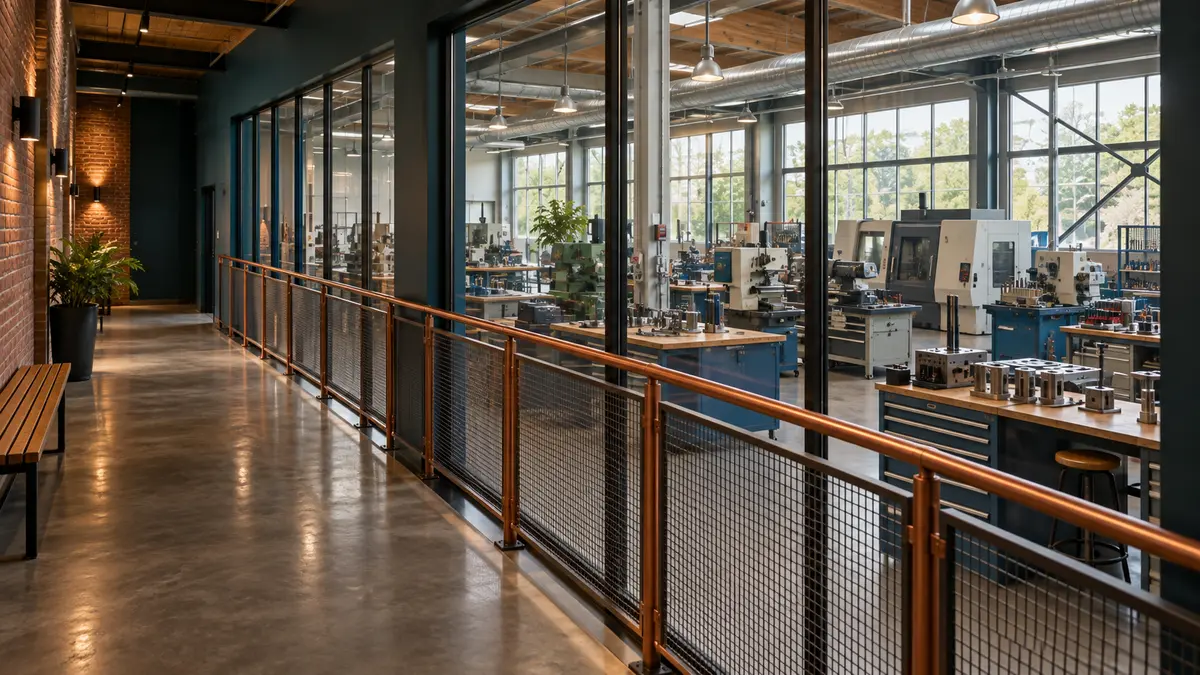
Employers in southern Russia are using workplace visits to introduce young people to industrial careers. RBC Rostov reported on 6 March 2024 that participating businesses saw growing interest in tours and wanted stronger involvement from schools and colleges. Their accounts describe outreach activity, not a measured conversion of visitors into employees.
A workplace visit makes an unfamiliar occupation visible
RBC's examples included Atlantis-Pak, which hosted more than 200 schoolchildren in 2023, and Semikarakorsk Ceramics, where visitors could see the hand-painted production process.
A job title can conceal much of the work behind it. Someone considering a career may recognise a finished product without knowing which occupations contribute to making it. Seeing a workplace can give those questions a concrete setting: what people make, what they check and how different roles relate to one another.
That first encounter serves a different purpose from training a recruit. A visitor is exploring possible directions, not demonstrating readiness to perform a task independently. Treating the visit as a recruitment result would skip the choices and learning that still lie ahead.

The school and the employer bring different questions
For an employer, a visit may offer a chance to explain its work. For an educational institution, the same visit can help students compare occupations and connect classroom interests with possible study routes. A useful meeting gives room to both perspectives rather than assuming that attendance itself settles the question of career interest.
What a follow-up discussion can clarify
- Which unfamiliar roles became easier to understand.
- What students would still like to learn about those roles.
- Whether the visit changed the questions they ask about further education.
Imagine a hypothetical student who arrives interested only in the final product but leaves curious about quality inspection. The visit has widened the student's understanding even if no job application follows. Conversely, an enjoyable outing need not change a career decision. These are examples of possible outcomes, not findings about the businesses in the report.
Attendance and longer-term outcomes need separate records
Visitor totals can show the reach of an activity. They cannot, on their own, establish how many participants chose a relevant course, completed it or later joined an employer. Those outcomes occur at different stages and may involve other influences.
For the local workforce conversation, the distinction gives factory visits a realistic place. They can be assessed as an opportunity to encounter work and ask informed questions without being presented as an immediate answer to every vacancy. The report points to a relationship between employers and educators; whether that relationship produces sustained participation requires evidence beyond the excursion itself.
Leave a comment