
Dispatches / Technology
Oktava DM Opens an Audio-Equipment Production Site in Tula
Oktava DM has opened a production site in Tula, bringing electronics, capsule assembly and enclosure work together while retaining operations at its older site.
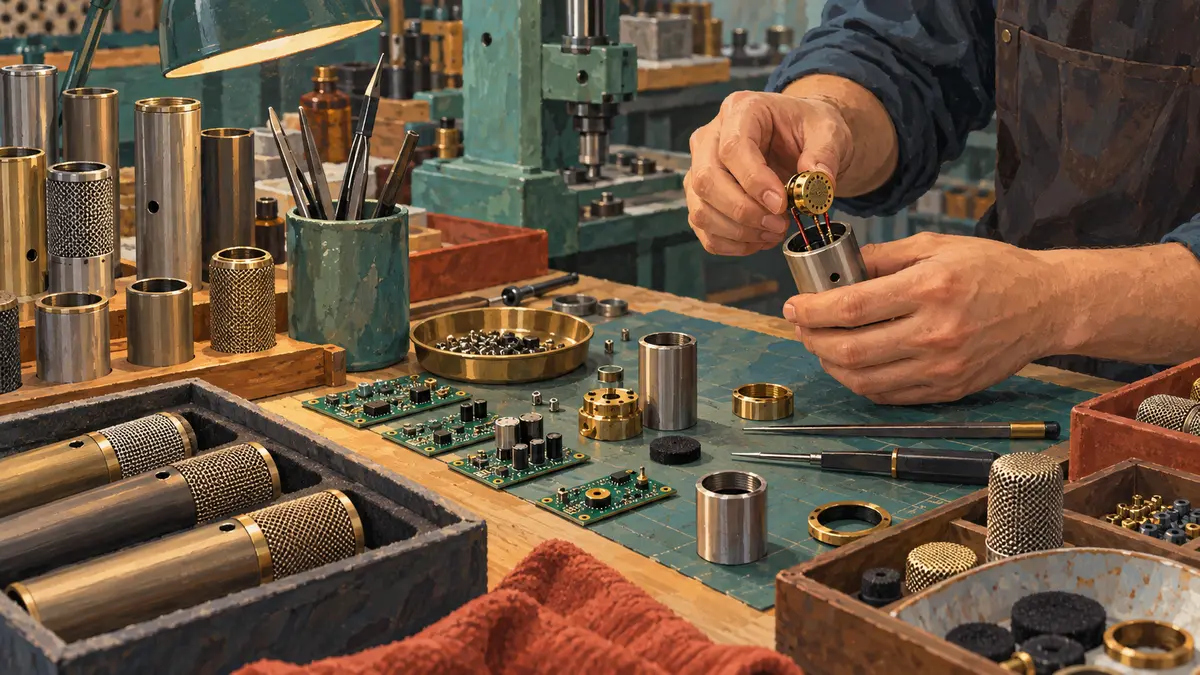
Oktava DM has opened an audio-equipment production site in Tula, Russia. In its 24 April 2026 announcement, the company said 80 specialists had started work. The facility brings together electronic component placement, microphone capsule assembly, enclosure machining and final measurement checks.
Several trades behind the finished device
Audio equipment reaches the customer as a single product, but its production involves different kinds of work. Electronic assemblies need to fit inside a physical enclosure, and the finished unit must be checked before dispatch. Bringing these operations together gives the factory a common point of responsibility for the device as it moves through production.
The opening does not mean the previous premises have closed. The company says assembly lines, casting and hearing-aid production remain at the historical factory site.

Trying a microphone in the studio
On a separate information page, the brand describes a microphone trial programme intended to let prospective customers assess equipment in their own setup. Applications come from studios, recording labels and other businesses in the music community; requests from people without a legal entity are considered separately. The page asks applicants to identify the microphone model and explain their request.
A factory check and a listening session serve different purposes. The first concerns the device supplied; the second lets a customer decide whether that device suits a particular recording task. Neither the existence of a new factory nor another user's favourable opinion can make that choice for a studio.
Questions for a studio's evaluation
- Which voice or instrument will the microphone record?
- Will the comparison use the studio's usual room and equipment?
- Who will listen to the recordings and document the decision?
Choosing a model for future recordings
For a professional buyer, the useful connection is between a clearly specified product and a repeatable working result. Keeping notes from an evaluation helps a studio explain why it chose a model and what it expects when buying another unit. Tula's new production site concerns the supply side of that relationship; the customer's own assessment remains part of putting equipment to work.
Leave a comment